
Zero to Commercial: A Cost Planning Guide
If your goal is to become a commercial pilot, one of the biggest questions is simple: What is this actually going to cost? The answer gets complicated quickly because becoming a commercial pilot isn’t one course with one price tag. It’s a progression. You earn your Private Pilot Certificate, add your Instrument Rating, build experience, and then work toward your Commercial Pilot Certificate.
By Aerotyne Aviation
At Aerotyne, we like to make that path easier to understand:
Private Pilot → Instrument Rating → Commercial Pilot
For planning purposes, we estimate about $55,000 from zero experience through Commercial Pilot, based on approximately $15,000 for Private Pilot, $13,000 for Instrument, and $27,000 for the complete Commercial Pilot plan.
These are planning numbers, not a fixed-price package. Your actual costs will depend on your individual progress, and training is paid for as you go.
Step One: Private Pilot
This is where everything begins.
Your Private Pilot training is about building the foundation: learning to fly the airplane, developing good judgment, navigating, communicating, and ultimately becoming capable of operating as pilot in command.
For a student flying about three times per week, Aerotyne’s current planning estimate is around $15,000 all-in. That assumes roughly 56 flight hours and about three months of consistent training, along with $2,000 for planned additional expenses such as ground school, study materials, training gear, and other costs.
And that three-times-per-week part matters. The more consistently you train, the easier it is to carry what you learned in one lesson into the next. Long gaps can mean spending valuable flight time getting back to where you were instead of moving forward.
The goal isn’t simply to find the cheapest hourly rate. It’s to make every paid hour count.
Step Two: Instrument Rating
Once you have your Private Pilot Certificate, the next step in the Aerotyne path is your Instrument Rating.
This is where you’ll develop greater precision, weather judgment, and instrument proficiency. For planning purposes, Aerotyne uses a typical baseline of 50 flight hours and approximately $12,750 all-in, which we round to about $13,000 when looking at the complete zero-to-commercial journey.
Could it cost less? Yes. Could it cost more? Absolutely.
Aerotyne’s current planning scenarios range from about $10,600 at 40 flight hours to $15,975 at 65 hours. How much training you ultimately need depends on your proficiency, preparation, consistency, and other factors that affect the training process.
That’s why we prefer to give students a realistic planning number rather than advertise a best-case number that may not reflect where they actually finish.
Step Three: Commercial Pilot
This is where the numbers need a little more explanation.
Getting your Commercial Pilot Certificate isn’t simply about completing a certain number of lessons. Total flight experience matters too.
Our complete planning scenario assumes you have accumulated approximately 106 total hours through Private Pilot and Instrument Rating training, leaving about 144 additional hours to reach the 250-hour Part 61 commercial target used in our planning guide.
Aerotyne’s complete plan includes 20 dual hours plus 124 aircraft-only hours for time-building, along with $2,000 in additional planned costs. The current estimate comes to $27,380, which we round to approximately $27,000 for overall planning.
This is an important distinction when you’re comparing flight-training prices. A lower advertised “Commercial Pilot” price may cover the required training and checkride preparation, but not all of the additional time-building needed to reach your commercial goal. Understanding what is and isn’t included can make a big difference when comparing the true cost of different training paths.
So, What Should You Budget?
For someone starting from zero and planning to complete the full Aerotyne pathway, our current big-picture estimate looks like this:
Private Pilot: ~$15,000
Instrument Rating: ~$13,000
Commercial Pilot: ~$27,000
Estimated Zero-to-Commercial Investment: ~$55,000
But here’s something equally important:
$55,000 isn’t a check you write on day one.
Aerotyne is pay as you fly. There is no large upfront training package. You progress through the program one stage and one training session at a time.
Why We Call It a Planning Guide
Flight training is personal. Two students can start with the same goal and ultimately require different amounts of flight time and different total investments. Your final cost can be affected by your proficiency, how frequently you train, preparation, weather, scheduling, aircraft availability, maintenance, examiner availability, and checkride readiness.
So we don’t present $55,000 as a guaranteed price. We present it as a realistic number you can actually plan around.
Knowing the bigger picture before you start lets you think beyond your next lesson. You can see the milestones ahead, understand where the money goes, and make better decisions about how consistently you want to train.
One Path. Three Major Milestones.
Going from your first lesson to a Commercial Pilot Certificate is a big commitment. It should also be an exciting one.
At Aerotyne, we’ve built the path around three clear milestones:
Private Pilot → Instrument Rating → Commercial Pilot
No large upfront package. No mystery about what comes next. Just personalized training, realistic cost planning, and a clear, structured path forward.
Want to Dig Deeper Into the Numbers?
Contact us for a complete copy of Aerotyne’s Flight Training: Cost Planning Guide, with a more detailed look at the costs and planning assumptions behind each stage of the Private → Instrument → Commercial pathway.
Ready to See What That First Step Is Really Like?
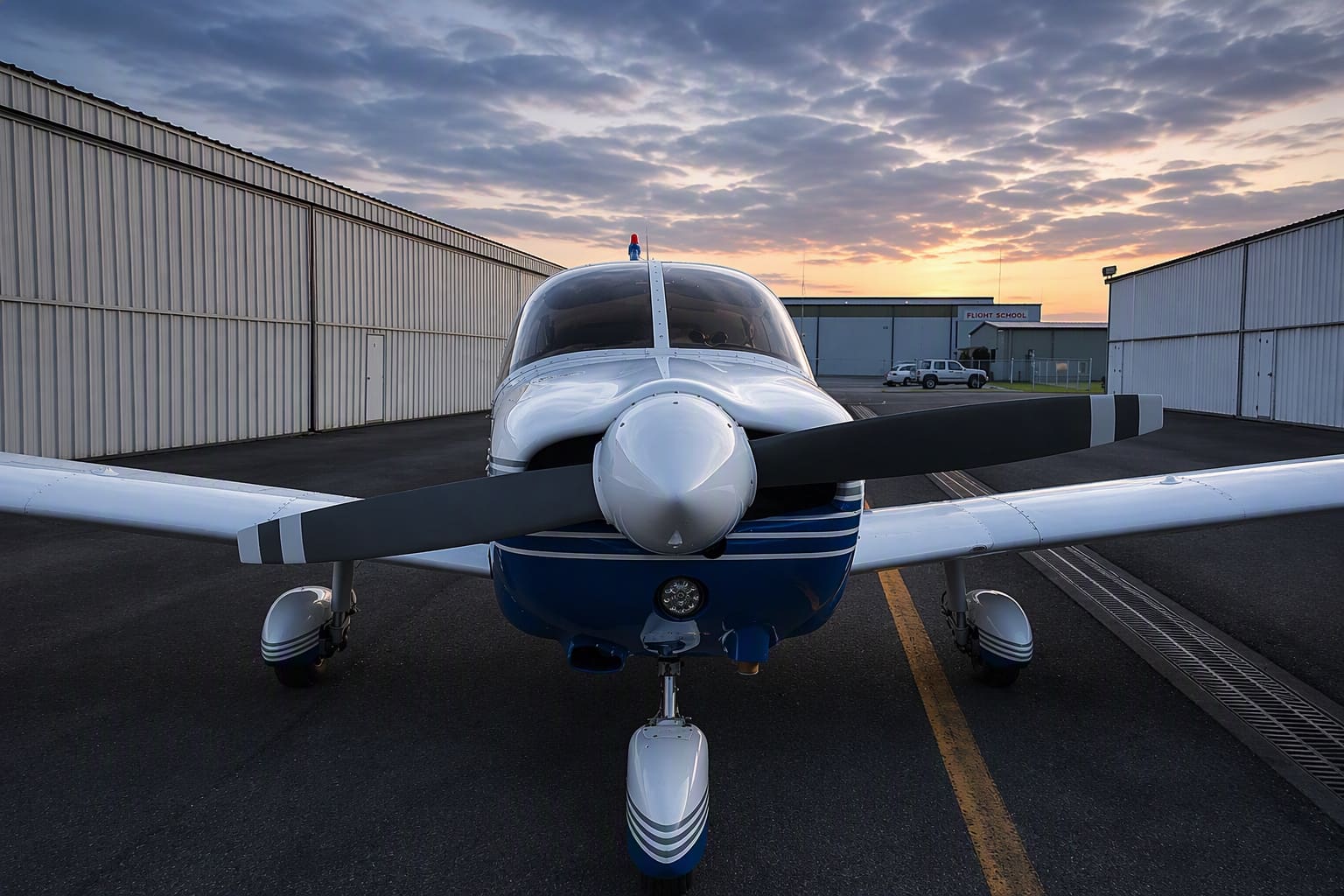
Start with a $175 Discovery Flight and experience a real first lesson in the Cherokee 180 before deciding what comes next.
You’ll have the opportunity to experience the aircraft, meet your instructor, and get a better feel for what flight training at Aerotyne is really like. One flight. One instructor. No long-term commitment.