
Flight Lessons in Gonzales: What a Three-Hour Lesson Actually Looks Like
Three hours on the schedule doesn’t mean three hours in the airplane. It means we have time to actually teach.
By Devin Melancon
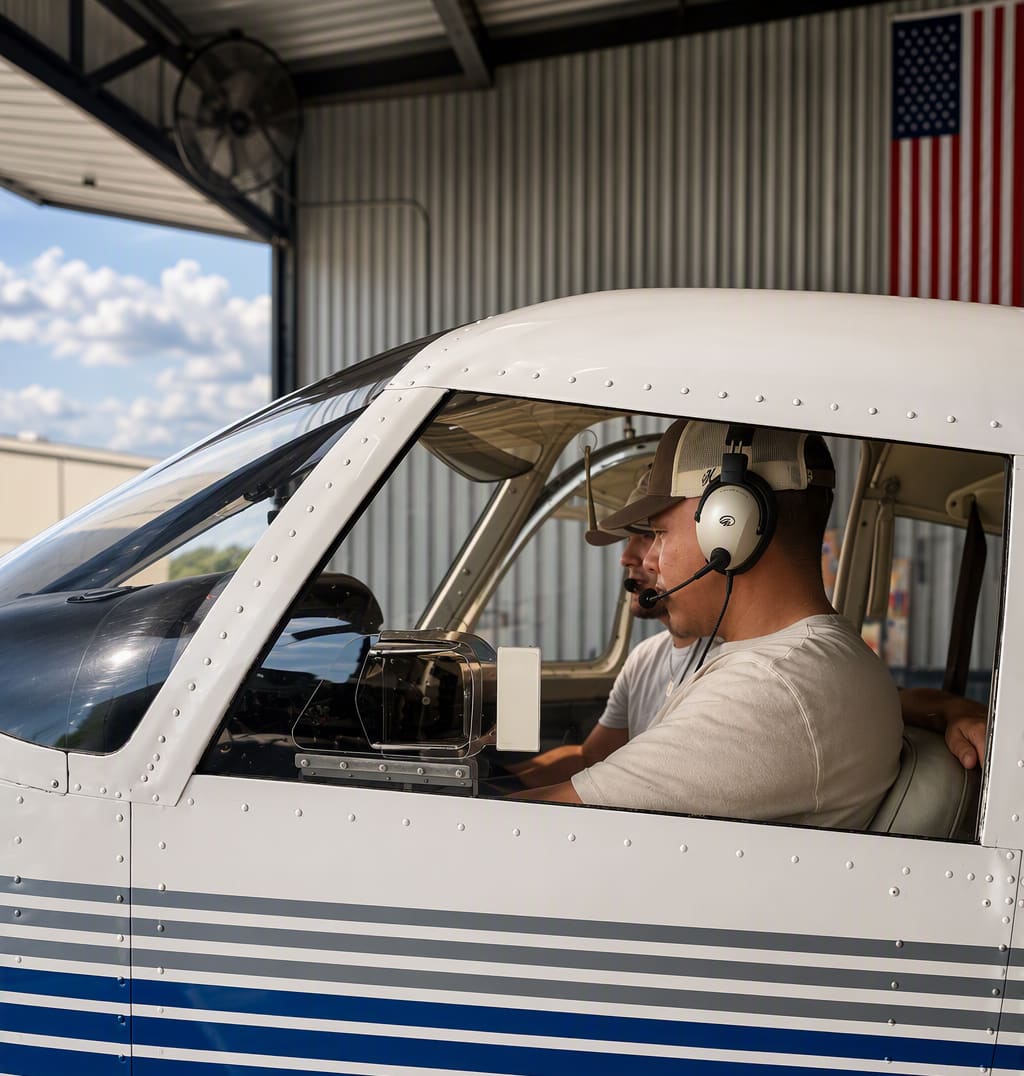
When I tell a new student that we schedule our flight lessons in three-hour blocks, I sometimes get the same reaction: “Wait, am I going to fly for three hours?”
No. That’s not how it works.
A flight lesson is more than the time between engine start and shutdown. There’s preparation before you arrive, a briefing before we fly, the flight itself, and a debrief afterward.
We reserve three hours because I don’t want any of those pieces rushed.
The Lesson Actually Starts Before You Get Here
Good flight training starts before you walk through the hangar door.
Aerotyne’s flight syllabus is integrated with Gold Seal Private Pilot Online Ground School, with course modules aligned to the flight-training syllabus. Students also work through lesson-specific FAA and Gold Seal resources, along with additional material that may be assigned by the instructor.
The idea is pretty simple: I don’t want your first exposure to a new concept to happen while the engine is running.
If we’re going to work on something in the airplane, I want you to have already seen the basic ideas at home. That doesn’t mean I expect you to show up knowing everything. You won’t, and that’s what instruction is for. But when you arrive already familiar with the subject, we can spend our time talking through your questions and then put those concepts to work in the airplane.
Every Lesson Has a Plan
When you get to the airport, we’re not just deciding what sounds good to work on that day.
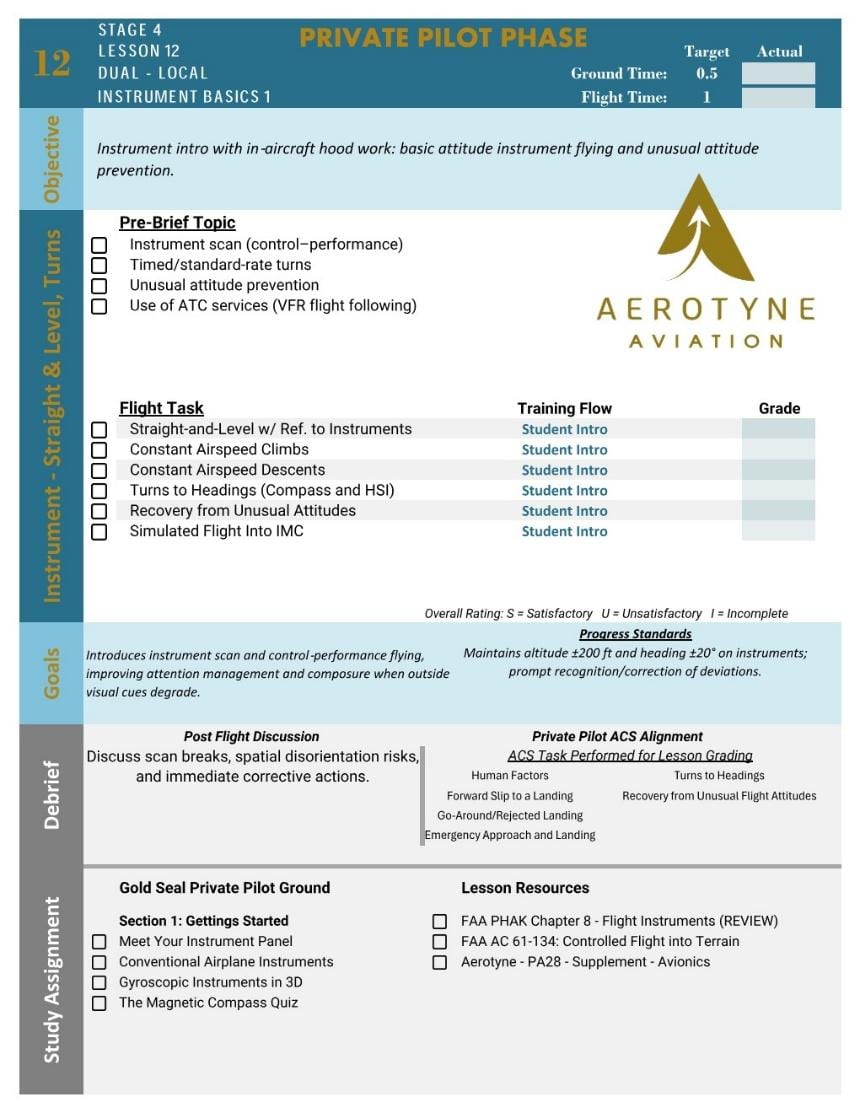
Your syllabus gives the lesson a specific objective, pre-brief topics, flight tasks, progress standards, post-flight discussion and study assignments.
Before we fly, we’ll sit down and walk through what we’re going to work on.
Take one of the instrument lessons from our Private Pilot syllabus as an example. Before the flight, the lesson introduces instrument scan, timed and standard-rate turns, unusual-attitude prevention, and the use of ATC services.
If something from your preparation didn’t make sense, this is the time to ask. Sometimes a few extra minutes talking through something on the ground can make a big difference once you get into the airplane.
Then We Put It Into Practice
Now we go fly. The actual flight will look different depending on where you are in your training. In that same instrument lesson, for example, the student practices straight-and-level flight by reference to instruments, constant-airspeed climbs and descents, turns to headings, recovery from unusual attitudes, and simulated flight into instrument conditions.
Another lesson might focus on something completely different. The point is that we’re not just flying around trying to accumulate hours. Every flight has a purpose.
You’ve studied the concept. We’ve talked about it together. Now you get to put your hands on the controls and actually do it. That’s where a lot of this stuff finally starts making sense.
There’s a Standard, Too
One thing I like about structured training is that you know what you’re working toward.
Our syllabus includes progress standards for the lessons. In the sample instrument lesson, for example, the student works toward maintaining altitude within ±200 feet and heading within ±20 degrees while flying by reference to instruments, along with recognizing and correcting deviations. Some things are going to click quickly. Others may take a few lessons. That’s normal.
The standard doesn’t change. The pace can.
This is Part 61. My job isn’t to push you through the syllabus because the calendar says it’s time to move on. My job is to help you develop the proficiency to move forward.
The Lesson Isn’t Over When the Engine Stops
Once we’re back on the ground, we debrief.
This is where we talk honestly about the flight. What went well? What needs work? What felt different in the airplane than you expected from studying it at home?
The syllabus gives that conversation direction as well. In the sample instrument lesson, the post-flight discussion includes instrument-scan breaks, spatial-disorientation risks, and corrective actions.
I want you leaving the airport knowing what you accomplished, what you need to work on, and where we’re headed next. Then the cycle starts again with preparation for your next lesson.
So Why Three Hours?
Pretty simple. Because good flight instruction shouldn’t feel rushed.
I want enough time to sit down and answer your questions before we fly. I want enough time to prepare the airplane properly. I want enough time for you to practice what we came there to learn. And when we’re finished flying, I want enough time to sit back down and talk about what just happened.
The three-hour block gives us room for the whole lesson, not just the time the airplane is running. It isn’t about filling three hours. It’s about making the hours you spend training count.
Study It. Brief It. Fly It. Debrief It.
That’s probably the simplest way to describe how we approach flight training at Aerotyne.
Study it. Come prepared with some familiarity with the lesson.
Brief it. Sit down with your instructor and make sure you understand what we’re going to do.
Fly it. Get in the airplane and put that knowledge into practice.
Debrief it. Talk about what worked, what needs improvement, and what comes next.
Then we do it again. Lesson by lesson, those individual pieces start coming together into something much bigger. You’re learning to think and operate like a pilot.
Come See What a Real First Lesson Looks Like
If you’re thinking about taking flight lessons in Gonzales, you don’t have to commit to an entire training program to see how Aerotyne works.
Start with a $175 Discovery Flight at Louisiana Regional Airport.
You’ll meet your instructor, get introduced to the airplane, and experience a real first flight lesson before deciding whether you want to continue. One flight. One instructor. No experience required. No long-term commitment.
Come fly with us. Then decide what comes next.